How AI Is Changing the Way Live Events Are Planned
The future of scan-and-plan tech that fully immerses you the venue before setting foot on the show floor
By Kedar Deshpande, VP Innovation at Freeman | Leading AI Strategy and Emerging Technology for Business Transformation
As seen on LinkedIn March 26, 2026.
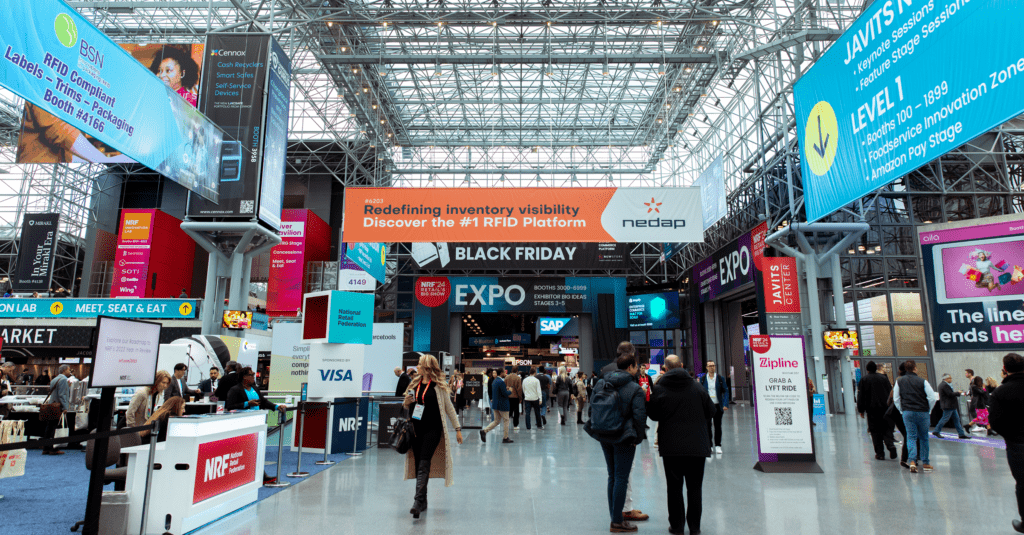
If you’ve ever walked through an empty convention center, there is a stillness that’s also thrilling. Millions of square feet of possibility, ceilings that soar, hallways that sprawl, loading docks the size of city blocks, all of it reverberating with potential.
As they walk through these spaces, the people who design and deliver live events are constantly asking themselves one question: How do we better plan, design, and bring to life a memorable experience in this space?
AI-powered 3D venue visualization is changing everything we know about exploring and planning events inside real convention centers. And we’re talking long before anyone arrives on site.
A New Starting Point
The convention center isn’t going anywhere. Those soaring ceilings, sprawling hallways, loading docks the size of city blocks — that’s still where live events happen, and nothing about what AI changes that.
What changes is the starting point.
For decades, the people who design and deliver these experiences have been asked to make their best decisions with incomplete information, working from static floor plans, educated guesses, and the hard-won intuition that only comes from having done it before.
That expertise isn’t going away either. But it deserves better tools.
Utilizing the latest AI tech gives teams a new kind of certainty before they commit — not just to layout and logistics, but to the story they’re trying to tell in that space.
When you can see your event before it exists, you spend less time correcting and more time creating.
What Changes When You Can See It First
The practical shift for clients is immediate and tangible. For the first time, they can walk their event in full photorealistic detail months before a single crate arrives on the show floor.
That means design decisions happen earlier, with far more confidence, because teams are reacting to something they can actually feel rather than something they’re trying to imagine from a diagram.
Planning cycles compress. Because stakeholders couldn’t visualize what they were approving, multiple rounds of revisions now happen faster. The question “what will this look like?” is immediately answered.
The operational benefits are just as meaningful. Measurement-grade spatial accuracy surfaces constraints (ceiling height, column placements, rigging points, traffic chokepoints) long before move-in day, when fixing them is still cheap.
Fewer surprises onsite mean fewer last-minute changes, and fewer last-minute changes mean protected budgets.
And for brand marketers and exhibitors, the ability to test layouts and visualize attendee journeys before committing real dollars changes the nature of the conversation entirely.
You’re presenting them with concepts and showing them the experience.
For designers and planners it means no more estimating or second-guessing. They’re starting inside reality, freeing up more time for creative exploration and reducing costly surprises on setup day.
And for operations teams it brings the experience design and execution into the same shared space so teams can confirm logistics, layouts, and schedules with confidence long before the load in.
Building a Library of the World’s Biggest Rooms
Our AI 3-D venue visualization platform is called Freeman Blue Echo. And with it, we’re building out a library of accurate, interactive digital versions of the top convention centers across the U.S. using AI-assisted spatial intelligence. And the results are pretty remarkable.
Specialized teams are going venue by venue capturing every dimension, layout, and visual detail and transforming them into fully navigable 3D environments. Anyone on our team, anywhere in the world, will be able to use them for designing a live event.
We want to build the richest possible picture of each venue, so we’re using an emerging capture technique called 3D Gaussian Splatting (3DGS) to recreate convention centers with a level of realism that feels instantly familiar. It’s one of the newest advancements in digital scene reconstruction.
Over time, each venue scan compounds in value. Every new event in that building starts smarter than the last and, as the Freeman Blue Echo venue library grows, so does our ability to connect those environments to real cost, labor, and logistics data, turning a rendering into a more valuable planning tool.
Think of it less like a blueprint and more like a memory: The kind of rich, spatial sense of a room that you carry after you’ve been somewhere.
By retaining the true visual character of the room, we can produce smooth, photorealistic views and virtual walkthroughs so teams can make decisions with greater confidence and far less guesswork.
That’s what drives my team. Not the technology for its own sake, but what it makes possible for the people who show up every day to turn empty rooms into memorable experiences.
Ready to make your exhibit work harder for your brand?